Is Nyjalik Kelly the Biggest Sleeper in the 2026 NFL Draft?
Is Nyjalik Kelly the Biggest Sleeper in the 2026 NFL Draft?
The Big 12 has spent the last year learning a painful lesson: do not leave Nyjalik Kelly unaccounted for on the edge. As the 2026 NFL Draft approaches, the UCF Knights standout has transformed from a high-upside transfer into a legitimate defensive nightmare. Kelly, standing at a lean 6-foot-5 and weighing in at 263 pounds, recently turned heads at his Pro Day by shaving his 40-yard dash time down to a crisp 4.84 seconds, a significant improvement from his Combine showing. This blend of length and sudden acceleration has scouts across the league wondering if the former Miami Hurricane is the draft's most overlooked pass-rushing gem.
Kelly’s 2025 campaign with the Knights was a showcase of consistency and disruptive energy. He anchored a UCF defensive unit that finished in the top 40 nationally in total defense, providing a veteran presence alongside Malachi Lawrence. Over 12 starts last season, Kelly racked up 46 total tackles and 7.5 tackles for loss, proving he was more than just a situational speed rusher. His ability to set the edge against the run while maintaining the flexibility to bend around massive Big 12 tackles has made him a frequent subject of conversation for teams like the Green Bay Packers, who are reportedly looking for a niche defender in their 3-4 scheme.
UCF head coach Scott Frost has been vocal about Kelly’s impact, noting that during spring sessions, the offense simply could not block him. "He wrecked practices," Frost told reporters, highlighting that Kelly hasn't even scratched the surface of his professional potential. Despite his productive college tenure, Kelly’s path hasn't been without its hurdles. After transferring from Miami, he had to adjust to a new system while carrying the expectations of a four-star recruit. He rose to the challenge, eventually becoming an All-Big 12 honorable mention and a leader in a locker room that underwent significant transition.
Looking at his final game results from the 2025 season, Kelly was a primary reason UCF remained competitive in a grueling conference schedule. In the season finale against rival Arizona, his pressure forced a critical late-game interception that nearly swung the outcome. Throughout the year, Kelly led the Knights with eight quarterback hurries and two forced fumbles, both of which were recovered by teammates for touchdowns. These "effort plays" are exactly what NFL evaluators are looking for when they pop in the tape—players who don't just win their matchup but affect the scoreboard through pure hustle.
As the draft clock ticks down, the narrative around Kelly is shifting from "raw athlete" to "versatile weapon." With his rare arm length—the longest among edge rushers at the Combine—and his proven production in a Power Four conference, Kelly is positioned to be a massive steal on Day 2 or early Day 3. Whether he’s dropping into coverage or pinning his ears back to hunt quarterbacks, the "New Nightmare" of the Big 12 is ready to take his terrorizing style of play to the professional stage.
Could Tanner Koziol Be the NFL's Next Great Mismatch Weapon?
Could Tanner Koziol Be the NFL's Next Great Mismatch Weapon?
At 6-foot-7 and 250 pounds, Houston Cougars tight end Tanner Koziol is a physical anomaly that modern NFL offenses crave. As he prepares for the 2026 NFL Draft, scouts are highlighting his unique profile as a "giant wide receiver" who moonlights as a tight end. Koziol’s final season in Houston was nothing short of spectacular, as he emerged as the primary target in high-leverage situations. His ability to box out smaller defensive backs and rise above linebackers in the red zone has earned him a Big Board ranking that is steadily climbing as teams look for the next great vertical threat at the position.
During the 2025 season, Koziol was the engine of the Cougars' passing attack. He finished the year with 65 receptions for 651 yards and five touchdowns, leading a team that relied heavily on his sure hands and massive catch radius. Koziol’s journey to this point was a winding one, involving stops at Ball State and a brief stint at Wisconsin before finding his home in Houston. This maturity and adaptability have served him well; he even served as an intermittent captain for the Cougars, earning the respect of a locker room that needed a steady veteran presence during their Big 12 transition.
NFL evaluators are particularly enamored with Koziol’s "basketball-style" play. Like a power forward in the paint, he understands how to use his frame to shield defenders from the ball, particularly on underneath routes and in the seam. While some draft analysts have questioned his top-end speed, his ability to manipulate defenders with subtle head fakes and leverage has made him a nightmare to cover in the slot. Pro Football Focus has noted that in a creative NFL offense, Koziol could thrive as a big-slot weapon, a role that mirrors the success of players like Mike Gesicki or a young Zach Ertz.
The Cougars' last game of the 2025 season saw Koziol at his best, fighting through bracket coverage to secure crucial third-down conversions. Houston's offense struggled with inconsistency throughout the year, but Koziol remained the one constant. His reliability is backed by the stats: he finished his collegiate career with over 2,100 receiving yards and 23 touchdowns, including just 10 drops across nearly 240 career catches. That kind of efficiency is rare for a player of his size and is a major reason why he is projected as a mid-round lock with significant starting potential.
As the draft draws closer, rumors suggest several AFC teams are eyeing Koziol as a developmental starter who can contribute immediately on special teams and in red-zone packages. His blocking remains a work in progress, as his height naturally leads to a higher pad level, but his "want-to" in the run game is evident on film. If he lands in a system that prioritizes 12-personnel and creative mismatches, Tanner Koziol could very well be the steal of the tight end class, turning his 6-foot-7 frame into a permanent problem for NFL defensive coordinators.

Report: NFL Teams Monitoring Joe Royer’s Medicals Ahead of Draft
Report: NFL Teams Monitoring Joe Royer’s Medicals Ahead of Draft
Joe Royer didn't return to the Cincinnati Bearcats for the 2025 season just to play another year of college football; he returned to cement his legacy. After breaking the legendary Travis Kelce's single-season reception record for a Cincinnati tight end in 2024, Royer entered his final campaign with a clear goal of becoming a first-round talent. While a string of minor injuries in 2025 hampered his statistical output, the 6-foot-5, 255-pound weapon remains one of the most intriguing prospects in the 2026 NFL Draft. However, new reports suggest that NFL teams, including the Jacksonville Jaguars, are closely scrutinizing his medical history before making a move on Day 2.
Royer’s 2025 season saw him record 29 catches for 416 yards and four touchdowns. While these numbers were a slight dip from his record-breaking 50-reception season in 2024, his impact on the field was undeniable. Royer served as a stabilizing force for a Bearcats offense that saw significant turnover at the quarterback position. His ability to work the middle of the field and find soft spots in zone coverage is among the best in this year’s class. Head coach Scott Satterfield has praised Royer as a "complete" tight end who is equally comfortable burying a linebacker in the run game as he is outrunning safeties on a seam route.
The medical concerns stem from Royer’s early years at Ohio State, where he missed significant time due to various ailments before transferring to Cincinnati. Despite these past hurdles, Royer proved his durability in 2024 by starting every game and carrying the bulk of the offensive load. In 2025, he played through several "bumps and bruises" to help the Bearcats navigate a tough Big 12 slate. His film from the season finale against Kansas State showed a player who was still explosive, nearly scoring on a 40-yard catch-and-run that highlighted his rare athleticism for the position.
Evaluators see Royer as a high-floor prospect with "YAC king" potential. His film breakdown shows a player who transitions from a catcher to a runner almost instantly, using his 255-pound frame to bowl over smaller defenders. One specific play against Nebraska, where he recorded over 100 yards on just two catches, has been on repeat in scouting rooms for weeks. It’s this "big-play" ability that makes him such a tantalizing prospect for teams looking to modernize their offense with a dual-threat tight end.
As of late April 2026, Royer is projected as a mid-to-late round pick, though a clean bill of health from team doctors could see him jump into the early third round. The Bearcats have already seen him surpass the records of franchise icons, and now they wait to see if he can follow in their footsteps to NFL stardom. For a team like the Jaguars, who have multiple Day 3 picks, Royer represents a high-reward bet on a player who has already proven he can play at an All-American level when at 100 percent.
Keyshaun Elliott: The 'Werewolf' Leader Charging Toward the NFL
Keyshaun Elliott: The 'Werewolf' Leader Charging Toward the NFL
The Arizona State Sun Devils defense underwent a massive identity shift under head coach Kenny Dillingham, and no player embodied that change more than linebacker Keyshaun Elliott. A pivotal member of the self-proclaimed "Werewolves" linebacker room, Elliott finished a stellar 2025 season as one of the most productive defenders in the Big 12. As he transitions to the 2026 NFL Draft process, Elliott has been a standout at the Senior Bowl and his recent Pro Day, where he clocked an impressive 20 mph during chase-down drills. His blend of old-school physicality and modern sideline-to-sideline speed has scouts labeling him a "rising riser" in a deep linebacker class.
Elliott’s 2025 stats tell the story of a player who lived in the opponent's backfield. He recorded a staggering 98 total tackles, 14 tackles for loss, and 7.0 sacks, leading an ASU defense that helped the team build on their 2024 conference title success. Transferring from New Mexico State, Elliott quickly became the heartbeat of the Sun Devils' locker room in Tempe. He’s known for his high football IQ, often seen directing teammates and diagnosing plays before they even materialize. This mental edge was on full display during ASU’s final game results, where Elliott’s seven-sack season was capped by a dominant performance that saw him disrupt both the run and pass with equal ferocity.
During a recent interview at the Senior Bowl in Mobile, Alabama, Elliott reflected on his time in Tempe, noting that the grueling 105-degree practices in Arizona helped forge the toughness that NFL teams value. He credits Coach Dillingham for allowing him to be his "authentic self," which translated into a playstyle defined by relentless effort and big-hit capability. Scouts have praised his ability to fly downhill, but they are equally impressed with his improved coverage skills, an area he worked on tirelessly during the 2025 offseason. At 6-foot-2 and 231 pounds, he has the prototypical frame of a modern NFL "MIKE" linebacker.
His path to the draft has been a model of consistency. From being a top dog on a New Mexico State team coached by Jerry Kill to becoming an All-Big 12 enforcer at ASU, Elliott has produced everywhere he’s been. He currently sits with 301 career tackles, a testament to his nose for the football. NFL teams like the Minnesota Vikings have been mentioned as potential landing spots, as they value linebackers who can contribute immediately on special teams while developing into every-down starters. Elliott’s "Werewolf" mentality—hunting in packs and playing with a relentless edge—is exactly what a defensive coordinator wants at the second level.
As the April 23 draft date nears, Elliott’s stock is as hot as a Tempe afternoon. While some analysts still classify him as a Day 3 prospect, his combination of elite production, leadership traits, and verified speed makes it more likely he hears his name called in the early rounds. For Keyshaun Elliott, the dream is no longer just a checkbox on a list—it's a reality that he has earned through years of being the hardest-working player on the field, regardless of the clouds in the sky or the temperature on the turf.
Could Fa’Alili Fa’Amoe Anchor an NFL Offensive Line This Fall?
Could Fa’Alili Fa’Amoe Anchor an NFL Offensive Line This Fall?
In the world of offensive line scouting, finding a player with the raw power and moldable frame of Wake Forest's Fa'Alili Fa'Amoe is a rare occurrence. As the 2026 NFL Draft approaches, Fa'Amoe stands as the literal anchor of the Demon Deacons' front, a 6-foot-5, 311-pound mountain of a man who has successfully navigated the transition from the defensive line to a premier offensive tackle prospect. Despite a 2025 season that saw him battle through nagging injuries, Fa'Amoe’s invite to the NFL Scouting Combine in Indianapolis confirmed that the league sees him as a high-potential project with starting-caliber traits.
Fa'Amoe’s 2025 campaign was a testament to his grit. He started 12 out of 13 games for Wake Forest at right tackle, logging nearly 800 snaps and helping protect the pocket in a highly competitive ACC. His journey to Winston-Salem followed head coach Jake Dickert from Washington State, and the move paid dividends for both the player and the program. Fa'Amoe’s physicality was a hallmark of the Demon Deacons' offense, and his standout performance at the Shrine Bowl—where he was consistently named one of the most versatile blockers in attendance—has only boosted his stock in the eyes of scouts.
There is a growing debate among NFL evaluators regarding Fa'Amoe’s best position at the next level. While he has played exclusively at tackle during his college career, some mock drafts, including recent projections from WalterFootball, suggest a move inside to guard could unlock his full potential. His lack of elite lateral quickness might be exposed by the NFL’s fastest speed-rushers, but his immense lower-body strength and "heavy hands" make him an ideal candidate to move bodies in a power-running scheme. Teams like the Cincinnati Bengals and Tennessee Titans are rumored to be keeping a close eye on him as a late-round developmental piece who could eventually protect their franchise quarterbacks.
The injury history is the one cloud hanging over Fa'Amoe’s draft profile. He missed significant time in earlier seasons, and his 2025 season was a "gut-it-out" performance where he was rarely at 100 percent. However, the fact that he was able to maintain his level of play and earn honorable mention All-ACC honors speaks volumes about his toughness. His final collegiate game saw him neutralize a highly-touted edge rusher, proving that when he is healthy, he has the wit and guile to handle top-tier talent. His RAS (Relative Athletic Score) might not be at the top of the charts, but his functional athleticism and length (nearly 34-inch arms) are exactly what NFL line coaches look for.
As we sit just days away from the 2026 NFL Draft, Fa'Amoe is positioned as a Day 3 sleeper who could provide immediate depth at multiple positions. Whether he stays on the outside at tackle or transitions to a "mauler" role at guard, his path from American Samoa to the bright lights of the NFL is nearly complete. For a team looking to add sand to their pants and a leader to their locker room, Fa'Alili Fa'Amoe is a bet worth making, offering the kind of high-upside frame that could anchor a professional line for years to come.

Lander Barton Anchors Utah's Elite Defense for 2026
Lander Barton Anchors Utah's Elite Defense for 2026
As the Utah Utes wrap up their final week of spring practice on this Friday, April 17, 2026, the spotlight remains firmly fixed on junior linebacker Lander Barton. The Salt Lake City native has transitioned from a promising legacy prospect into the undisputed cerebral leader of Morgan Scalley’s defensive unit. Scouts and coaches alike have noted that Barton’s diagnostic skills have reached a professional level, allowing him to neutralize complex Big 12 offenses before the ball is even snapped.
Utah enters the 2026 campaign with massive expectations following a 10-4 season in 2025 that concluded with a hard-fought 31-24 victory over Arizona in the Alamo Bowl. In that contest, Barton was a statistical supernova, recording 11 tackles and a forced fumble that set the tone for the Utes’ physical dominance. Head Coach Kyle Whittingham has consistently praised Barton’s evolution, noting that his ability to play sideline-to-sideline makes him one of the most versatile defenders in the country.
The Heartbeat of Sack Lake City
Barton’s 2025 stats tell a story of relentless productivity. He finished the year with 102 total tackles, 8.5 tackles for loss, and two interceptions. However, his impact goes beyond the box score. Within the Utah locker room, Barton is viewed as the extension of the coaching staff. During the spring game earlier this month, Barton was seen constantly adjusting the front four and ensuring the secondary was aligned against high-tempo looks.
The 2026 roster is bolstered by several returning starters, including defensive tackle Keanu Tanuvasa and safety Tao Johnson. This continuity allows Barton to take more risks in the pass-rush game, an area where he has shown significant improvement during April drills. With Barton patrolling the middle, the Utes’ defense is projected to rank in the top ten nationally for the third consecutive year.
Chasing the Big 12 Title
The Utes’ transition to the Big 12 has been remarkably smooth, but a conference title remains the ultimate goal. Last year's narrow losses to Kansas State and Oklahoma State still sting the veteran core. Barton has been vocal about the team's finishing ability, emphasizing that the difference between a bowl appearance and a College Football Playoff berth lies in the fourth quarter. Utah's 2025 defensive stats were impressive, allowing only 18.4 points per game, but Barton believes they can lower that number even further.
As the transfer portal prepares to open its spring window, the Utes look stable. The core identity of the team remains its physicality in the trenches and its disciplined linebacking corps. With Isaac Wilson expected to take a leap at quarterback, having a safety net like Barton on the defensive side provides the team with the balance necessary to navigate a grueling 2026 schedule that features a marquee non-conference matchup against Florida.
A Pro-Ready Talent
Draft analysts are already circling Barton as a potential first-round pick in the 2027 NFL Draft. At 6-foot-4 and 240 pounds, he possesses the ideal frame for the modern NFL linebacker. His performance in the 2025 Alamo Bowl was a microcosm of his career: disciplined, explosive, and clutch. As the Utes head into the summer months, Barton’s leadership will be the primary catalyst for a program that is no longer satisfied with just being a contender—they want to be the standard.
Could Behren Morton Be the Top QB in the 2027 NFL Draft?
Could Behren Morton Be the Top QB in the 2027 NFL Draft?
Texas Tech quarterback Behren Morton has spent the spring of 2026 answering every question about his health and arm talent. After a 2025 season where he threw for 3,650 yards and 28 touchdowns, Morton has emerged as the face of the Big 12. His performance in the Red-Black spring game last weekend showcased a refined pocket presence and a deep-ball accuracy that has NFL scouts salivating. If he continues this trajectory, the conversation about him being a top-five pick in next year's draft is no longer a whisper—it is a roar.
The Red Raiders are coming off an 8-5 season in 2025, capped by a high-scoring 38-20 win over Tulane in the Independence Bowl. In that game, Morton was nearly flawless, completing 72% of his passes and demonstrating a command of Zach Kittley’s air-raid offense that few have matched in Lubbock since the Patrick Mahomes era. The chemistry between Morton and his receiving corps, specifically breakout star Reggie Virgil, has been the highlight of the April practice sessions.
Navigating the Big 12 Gauntlet
The 2026 Texas Tech roster is arguably the deepest of the Joey McGuire era. With the return of four starting offensive linemen and a backfield that features the bruising Tahj Brooks (who opted for a final season), Morton is surrounded by elite weaponry. The team averaged 31.5 points per game in 2025, and with Morton’s improved decision-making, that number is expected to climb. His ability to extend plays with his legs, while remaining a pass-first threat, makes the Red Raiders one of the most difficult offenses to scheme against.
The NFL Buzz Grows
Draft analysts have been frequenting Lubbock this spring, primarily to evaluate Morton’s shoulder health, which had been a concern earlier in his career. Reports from camp suggest his velocity is higher than ever. Morton’s 2025 stats—3,650 yards, 28 TDs, and only 7 interceptions—reflect a quarterback who has learned to balance aggression with ball security. In the 2025 bowl win, his ability to manipulate safeties with his eyes was cited by commentators as "pro-level manipulation."
As of April 17, 2026, the Red Raiders are projected to be a dark horse for the Big 12 title. The schedule is favorable, with home games against Oklahoma State and West Virginia. For Morton, the 2026 season isn't just about winning games; it’s about solidifying his legacy in Lubbock and proving that he can be the next great quarterback to transition from the South Plains to the Sunday stage. With McGuire’s energy and Morton’s arm, the "Wreck 'Em" spirit is at an all-time high.
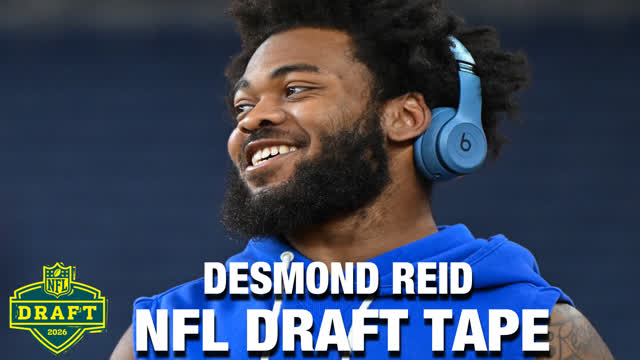
Desmond Reid's Explosive Spring Has Pitt Dreaming of ACC Title
Desmond Reid's Explosive Spring Has Pitt Dreaming of ACC Title
The Pitt Panthers may have found their most dynamic offensive weapon in a generation. Running back Desmond Reid has been the talk of the ACC this spring, with coaches and teammates describing his speed as "video-game-like." Following a 2025 season where he amassed over 1,400 all-purpose yards, Reid has spent the month of April refining his role as a pass-catcher out of the backfield. On this Friday, April 17, 2026, Reid is being discussed not just as an All-ACC candidate, but as a legitimate Heisman Trophy dark horse.
Pitt’s 2025 campaign was a year of rebuilding and resilience, finishing with a 7-6 record. The season ended on a disappointing note with a 21-17 loss to Rutgers in the Pinstripe Bowl, but Reid was the clear silver lining. Despite the soggy conditions at Yankee Stadium, Reid managed 145 yards from scrimmage, proving that his game travels regardless of weather or venue. Head Coach Pat Narduzzi has emphasized that the 2026 offense will be centered entirely around Reid’s unique skill set.
A New Era for the Panthers Offense
The 2026 roster sees the return of quarterback Eli Holstein, who developed a telepathic connection with Reid during the latter half of last season. In 2025, Reid’s stats were eye-popping: 1,050 rushing yards, 420 receiving yards, and 12 total touchdowns. During spring drills, offensive coordinator Kade Bell has been using Reid in various alignments, including in the slot and as a return specialist, to maximize his touches.
Pitt’s defense, traditionally the team’s strength, is also looking stout with the emergence of several young defensive ends. However, for the Panthers to compete with the likes of Clemson and Florida State in the ACC, the offense must be more explosive. In 2025, Pitt averaged 24.8 points per game; Narduzzi’s goal for 2026 is to push that number over 30, a feat that seems attainable with a healthy Reid leading the charge.
Rumors of Professional Interest
There have been persistent rumors throughout the spring that Reid was a target for several high-profile programs via the transfer portal, but he has reaffirmed his commitment to the Panthers. Sources close to the program suggest that a significant NIL package, combined with the promise of a featured role in a high-octane offense, kept the star back in Pittsburgh. With the 2026 season opener against West Virginia in the Backyard Brawl looming, Reid’s decision to stay has galvanized the fanbase and the locker room alike.

Utah's Logan Fano Set for Breakout Season After Stellar Spring
Utah's Logan Fano Set for Breakout Season After Stellar Spring
In the high-altitude practices of Salt Lake City, one name has consistently terrorized the Utah offensive line this spring: Logan Fano. The edge rusher, now fully healthy and playing at a transformed weight of 255 pounds, has been a nightmare for tackles in one-on-one drills. As of April 17, 2026, Fano is being touted as the next great pass-rusher to emerge from Kyle Whittingham’s program, following in the footsteps of legends like Jonah Elliss. His combination of a lightning-quick first step and a refined set of hand-fighting techniques has coaches believing he could lead the Big 12 in sacks this fall.
The Utes are coming off a successful 10-4 season in 2025, which saw them finish strong with an Alamo Bowl victory over Arizona. While the defense was statistically dominant, the pass rush occasionally lacked a consistent edge threat during the mid-season stretch. Fano’s development is intended to fix that. In 2025, Fano recorded 6.5 sacks in a rotational role, but his performance in the bowl game—where he had two tackles for loss and three quarterback hurries—offered a glimpse of his true potential.
The Twin Pillars of the Ute Defense
Fano’s rise coincides with the veteran leadership of Lander Barton, creating a lethal inside-outside combination for the Utes. The 2026 roster features a defensive front that is both massive and mobile. With Junior Tafuna anchoring the interior, Fano is often left in single-coverage on the outside, a mismatch he has exploited throughout April. Last season, Utah's defense allowed only 110 rushing yards per game, and with Fano’s improved strength, that run defense is expected to remain elite.
Championship Aspirations
For Utah, the 2026 season is all about capturing that elusive Big 12 crown. The last game of 2025 showed that the Utes can out-physical high-scoring offenses, but to reach the College Football Playoff, they need game-changers on every level. Fano’s ability to force turnovers and create short fields for the offense will be critical. In 2025, the Utes forced 18 turnovers; with Fano’s increased snap count, the coaching staff is targeting a number closer to 25.
Off the field, Fano has taken on a mentor role for the incoming freshmen, embodying the "next man up" philosophy that has defined Utah football for two decades. As spring practice concludes today, the sentiment in Salt Lake is clear: Logan Fano is no longer just a prospect; he is a predator on the edge, and the Big 12 has been put on notice.
Skyler Gill-Howard Leading Texas Tech’s Physical Defensive Transformation
Skyler Gill-Howard Leading Texas Tech’s Physical Defensive Transformation
Texas Tech has long been known for its explosive offenses, but in the spring of 2026, the narrative is shifting toward the defensive side of the ball. At the center of this transformation is senior defensive lineman Skyler Gill-Howard. Known as a "human wrecking ball" by his teammates, Gill-Howard has dominated the interior line during April practices, consistently collapsing pockets and disrupting the run game. His leadership has been the cornerstone of Joey McGuire’s effort to build a defense that can match the physicality of any team in the Big 12.
The Red Raiders finished the 2025 season with an 8-5 record, concluding on a high note with a 38-20 victory over Tulane in the Independence Bowl. In that game, Gill-Howard was instrumental, recording five tackles and a key sack on a third-down play late in the fourth quarter. That performance served as a springboard for his final collegiate season. Tech’s defensive stats in 2025 showed marked improvement, particularly in red-zone efficiency, where they ranked in the top half of the conference.
A New Standard of Toughness
The 2026 Texas Tech roster features a mix of veteran experience and young athleticism. Alongside Gill-Howard, linebacker Ben Roberts and cornerback Bralyn Lux return to provide a solid foundation. However, it is the defensive line that has seen the most growth. Gill-Howard’s 2025 stats—45 tackles, 5.5 sacks, and 10 tackles for loss—are expected to be eclipsed as he moves into a full-time leadership role. During the spring sessions, he has been seen working extra hours with the younger linemen, teaching the nuances of hand placement and leverage.
Wreck 'Em Mentality in the Big 12
Coach McGuire has made it clear that the "Wreck 'Em" identity must start with the defense. In 2025, Texas Tech allowed 26.5 points per game, a respectable number in the Big 12, but one they aim to lower in 2026. With Behren Morton leading a potent offense, a top-tier defense could make the Red Raiders a legitimate contender for the conference title. Gill-Howard’s ability to take on double teams allows the linebackers to play more freely, a strategy that was highly effective in their bowl win last December.
As spring practice officially wraps up this Friday, April 17, 2026, the energy in Lubbock is palpable. The Red Raiders are no longer content with being an offensive-only threat. With Skyler Gill-Howard anchoring the trenches, Texas Tech is building a defense that is as feared as its air raid. The road to the Big 12 championship goes through a physical defense, and Gill-Howard is ready to lead the charge.
Caleb Lomu: Is the Utah Tackle the Missing Piece for the Bears?
Caleb Lomu: Is the Utah Tackle the Missing Piece for the Bears?
As the 2026 NFL Draft draws closer, the buzz surrounding Utah offensive tackle Caleb Lomu has reached a fever pitch. Just days before the draft kicks off in Pittsburgh, reports have surfaced that the Chicago Bears hosted the 6-foot-6, 303-pound standout for a critical Top 30 visit. Lomu, a Gilbert, Arizona native, has seen his draft stock skyrocket after a dominant redshirt sophomore season that left NFL scouts drooling over his rare combination of length and technical precision.
During his tenure with the Utah Utes, Lomu became a cornerstone of one of the most physical offensive lines in the country. In 12 starts during the 2025 campaign, he was a brick wall in pass protection, allowing zero sacks and just eight total pressures across 357 pass-blocking opportunities. His ability to anchor against power rushers while maintaining the lateral quickness to handle speed off the edge has made him one of the most intriguing tackle prospects in this year’s class. Utah’s offensive identity under head coach Morgan Scalley relied heavily on a punishing ground game, and Lomu was a primary catalyst, helping the Utes amass a school-record 3,462 rushing yards last season.
NFL analysts, including Lance Zierlein, have praised Lomu for his balance and well-timed punches. While some scouts have noted that his run blocking is slightly behind his elite pass protection, the consensus is that his upside is limitless. "Lomu is an above-average athlete," one report noted, highlighting his 86 athleticism score at the NFL Combine, which ranked fifth among all tackles. For a team like the Chicago Bears, who are desperately searching for long-term stability at the left tackle position, Lomu represents a high-ceiling prospect who could protect their franchise quarterback for the next decade.
The Bears' interest in Lomu isn't isolated. He has reportedly taken visits with several other tackle-needy teams, including the Philadelphia Eagles and Cleveland Browns. However, the connection to Chicago is particularly interesting given the team's current roster situation. With projected starter Ozzy Trapilo expected to miss significant time due to injury, the path for a rookie tackle to start on Day 1 in the Windy City is wide open. Lomu’s experience in Utah's zone-heavy scheme, which utilizes movement and misdirection, makes him a natural schematic fit for modern NFL offenses that prioritize mobile, athletic protectors.
Despite being labeled as "still under construction" by some skeptics who want to see more consistent aggression in his run blocking, Lomu's trajectory suggests he is nowhere near his floor. His rapid development over the last 12 months, combined with his clean injury history and All-Big 12 First Team honors, has solidified him as a potential first-round selection. As the draft board begins to take shape, the question isn't whether Caleb Lomu will be a star, but which team will be lucky enough to secure his services on draft night.
Reportedly: VJ Payne’s 23 MPH Speed Turning Heads in NFL Front Offices
Reportedly: VJ Payne’s 23 MPH Speed Turning Heads in NFL Front Offices
When it comes to the safety position in the 2026 NFL Draft, few players offer the athletic profile of Kansas State standout VJ Payne. As draft analysts finalize their big boards, Payne has emerged as a "fast riser"—quite literally. During his senior season in Manhattan, Payne was clocked at a staggering top speed of over 23 miles per hour in practice, a figure that would rank him among the fastest players in the entire NFL. This elite speed, combined with his 6-foot-3, 206-pound frame, has scouts labeling him as a potential Day 3 steal with Day 1 athletic traits.
Payne’s journey at Kansas State was defined by longevity and high-level production. A product of Gainesville, Georgia, Payne played in 52 career games for the Wildcats, ranking him 11th in school history. Over four seasons, he racked up 207 total tackles, 10.5 tackles for loss, and four interceptions. His reliability was unmatched, ending his collegiate career with a streak of 41 consecutive starts. Scouts have been particularly impressed with his range on the back end of the defense, where his 4.4 speed allows him to cover ground from sideline to sideline with ease.
Beyond the physical metrics, Payne has won over NFL front offices during the interview process. Following a successful showing at the Senior Bowl and the NFL Combine, Payne’s "football IQ" has become a major talking point. "I showcased my speed, my length, and my intelligence on and off the field," Payne told reporters. His ability to diagnose plays before they happen was evident in his favorite collegiate memory: a game-clinching interception against Tulane during his junior year. This combination of mental acuity and raw physical tools is exactly what modern defensive coordinators look for in a versatile safety.
Rumors are circulating that the New England Patriots and several other AFC teams have identified Payne as a primary developmental target. His length and speed make him an ideal candidate for special teams coverage early in his career, with the upside to grow into a starting role in a zone-heavy scheme. Analysts suggest that while he is already a physical and willing tackler, his ceiling will be determined by how quickly he can adapt to NFL-style man coverage. However, with a PFF run defense grade that consistently ranked among the best in the Big 12, the floor for Payne remains exceptionally high.
As the draft approaches, the Kansas State product finds himself in a unique position. While he may not be a household name like some of the blue-chip prospects from the SEC, his tape shows a player who consistently performs in big moments. Whether he hears his name called in the fourth round or the sixth, VJ Payne is a name that NFL fans should keep a close eye on as a potential breakout rookie in 2026.
Max Iheanachor to the Windy City? Arizona State Star Linked to Bears
Max Iheanachor to the Windy City? Arizona State Star Linked to Bears
The Chicago Bears are leaving no stone unturned in their quest for offensive line reinforcements, and Arizona State tackle Max Iheanachor is the latest name to surface as a primary target. Reports confirmed that Iheanachor was hosted by the Bears for a Top 30 visit this week, joining a select group of elite offensive linemen that the franchise is considering for their first-round pick. Standing at 6-foot-3 and weighing over 300 pounds, Iheanachor has been a dominant force for the Sun Devils, establishing himself as one of the most athletic and physically imposing blockers in the Big 12.
Iheanachor’s rise to prominence has been one of the biggest stories of the 2025-2026 college football season. As a cornerstone of the Arizona State front, he helped lead an offense that found new life under the coaching staff's revamped scheme. His ability to move in space and find blocks at the second level has drawn comparisons to some of the league's best pulling guards, though his future in the NFL likely remains at tackle due to his exceptional lateral quickness. Scouts have noted his "heavy hands" and finishing mentality, traits that are highly coveted by teams looking to establish a more physical identity in the trenches.
The interest from Chicago comes at a pivotal time for the organization. With the 2026 NFL Draft less than two weeks away, the Bears are faced with the challenge of replacing injured veteran Ozzy Trapilo. Iheanachor is widely projected as a potential late first-round or early second-round selection, fitting perfectly into the range where the Bears might look to secure a Day 1 starter. His performance during the pre-draft process, including a stellar showing in drills that emphasized explosiveness, has only served to solidify his status as a top-tier prospect.
While Iheanachor is known for his physicality, his football intelligence has also been a major selling point. He was credited with allowing minimal pressures during his final season in Tempe, showing a refined understanding of pass-protection angles and defensive end tendencies. For an Arizona State program that has focused on rebuilding its prestige, Iheanachor serves as the ultimate success story of player development. His transition from a highly touted recruit to a polished NFL prospect has been seamless, and he now stands on the precipice of professional stardom.
As draft night approaches, the Sun Devil standout remains focused on the task at hand. "I just want to go to a team where I can compete and help us win," Iheanachor recently stated. Whether he lands with the Chicago Bears or another suitor, his impact on the field is expected to be immediate. In a draft class that is deep at the tackle position, Max Iheanachor’s blend of raw power and refined technique makes him one of the safest bets on the board.

Rumor: Emmanuel Henderson Jr. Seeing Surge in Interest After Chiefs Meeting
Rumor: Emmanuel Henderson Jr. Seeing Surge in Interest After Chiefs Meeting
The "speedster" of the 2026 NFL Draft class might just be Emmanuel Henderson Jr., and the NFL is starting to take notice. Following a productive senior season with the Kansas Jayhawks, Henderson has been a busy man, reportedly meeting with over a dozen NFL teams during the pre-draft cycle. Most notably, a recent meeting with the Kansas City Chiefs has sparked rumors that the explosive wide receiver could be a "priority target" for the defending champions as they look to add more vertical threats to their high-octane offense.
Henderson’s journey is one of the more unique narratives in this draft class. A former five-star running back recruit who spent three seasons at Alabama, Henderson transferred to Kansas for his senior year to prove he could thrive as a full-time wide receiver. The results were immediate. He finished the 2025 season with 45 receptions for 766 yards and five touchdowns, averaging a whopping 17.0 yards per catch. His ability to take the top off a defense was on full display in a breakout performance against Cincinnati, where he recorded 213 receiving yards and two touchdowns.
Verified at a 4.44 in the 40-yard dash, Henderson is more than just a deep threat. His background as a running back gives him exceptional vision and power after the catch, a rarity for receivers with his straight-line speed. He also proved to be a dynamic weapon in the return game for the Jayhawks, housing a 94-yard kickoff return touchdown early in the season. Scouts have noted that while his route tree is still developing, his "game-breaking" ability makes him a dangerous weapon whenever he touches the ball. In an NFL that increasingly values yards after the catch (YAC) and special teams versatility, Henderson fits the modern mold perfectly.
Despite his production, Henderson is currently projected as a late-round selection or a high-priority undrafted free agent. This discrepancy between his tape and his projection has many analysts calling him a potential "Draft Day steal." Teams like the Green Bay Packers, Las Vegas Raiders, and Washington Commanders have all held formal visits with the 6-foot-1 athlete, but the allure of the Chiefs remains the strongest rumor. Playing just a few hours from Lawrence, Kansas, and joining a quarterback like Patrick Mahomes would be a dream scenario for the former Crimson Tide star.
As the final evaluations come in, the Kansas Jayhawks program is hopeful that Henderson will be one of several players to hear their name called. His transformation from a rotational player in Tuscaloosa to a primary offensive engine in the Big 12 is a testament to his work ethic and adaptability. If a team is willing to bet on raw athleticism and big-play potential, Emmanuel Henderson Jr. is the kind of player who could change the fortune of an offense in a single snap.
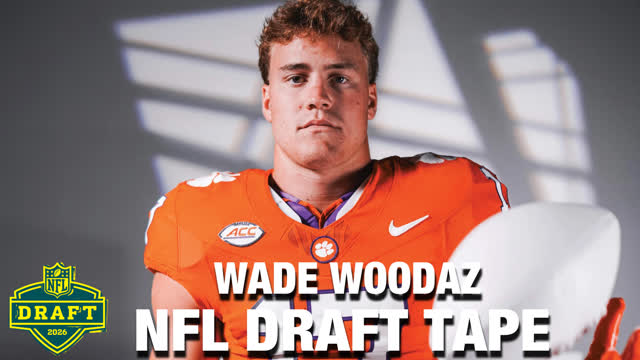
Wade Woodaz: Why the Clemson Captain is the Modern NFL’s ‘Perfect Match’
Wade Woodaz: Why the Clemson Captain is the Modern NFL’s ‘Perfect Match’
In the landscape of Clemson Tigers football, few players have embodied the program's values more than linebacker Wade Woodaz. As he prepares for the 2026 NFL Draft, Woodaz is being hailed by scouts as a "coach's dream" and a versatile defender who can solve many of the problems presented by high-powered NFL offenses. A permanent team captain and a consistent presence on the All-ACC Academic Team, Woodaz has spent the last four years proving that he is as sharp mentally as he is physical on the field.
Woodaz’s career statistics tell the story of a player who was always in the thick of the action. Over 51 collegiate games, he accrued 217 total tackles, 28.5 tackles for loss, and 9.0 sacks. His versatility was his calling card, as he split time between linebacker and safety, showing a comfort level in space that is rare for a player of his size. Dabo Swinney famously referred to him as a "baller," praising his relentless motor and his ability to play with an edge in every single snap. In the 2025 season alone, Woodaz finished second on the team with 77 tackles, including several standout performances against top-tier competition like LSU and Florida State.
NFL scouts are particularly intrigued by Woodaz’s ability to stay on the field for all three downs. In a league where linebackers are often subbed out for extra defensive backs, Woodaz’s experience in coverage makes him an asset. He finished his career with 13 pass breakups and three interceptions, including a memorable pick-six. His length and lateral mobility allow him to match up with tight ends and running backs, a critical skill set in the pass-heavy NFL. "He plays the way you want everybody to play," Swinney noted, and that sentiment has been echoed by several defensive coordinators during the pre-draft process.
Off the field, Woodaz’s leadership has been just as impactful. He was one of the few players selected to represent Clemson at the New York Stock Exchange and has been a frequent participant in community service trips. This level of maturity has made him a favorite in team interviews, where he has reportedly impressed franchises with his understanding of complex defensive schemes. While he may not be the flashiest athlete in the draft, his "floor" as a reliable, high-IQ defender makes him a safe bet for teams looking to bolster their linebacker corps.
Current projections have Woodaz going anywhere from the third to the fifth round. However, his history of over-performing expectations suggests he could carve out a long and successful career at the next level. As he moves from "The Valley" to the professional ranks, Wade Woodaz leaves behind a legacy of toughness and excellence at Clemson. For the NFL team that selects him, they are getting a ready-made leader who is prepared to contribute from day one, whether on special teams or in the heart of the defense.
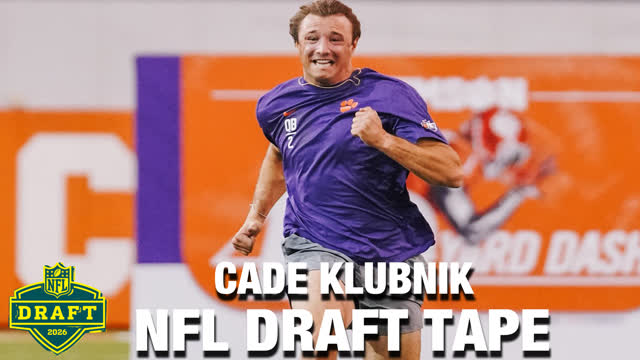
Could Cade Klubnik Be the Biggest Value Pick of the 2026 NFL Draft?
Building the Case: Cade Klubnik's Path to the 2026 NFL Draft
As the 2026 NFL Draft approaches, few prospects have seen a more volatile journey than Clemson quarterback Cade Klubnik. After entering the 2025 season with massive expectations—once ranked as the No. 4 overall player in college football—Klubnik’s draft stock took several hits during a challenging autumn for the Tigers. However, as scouts peel back the layers of his senior season, a narrative of resilience and late-season efficiency is beginning to emerge, positioning him as a potential mid-round steal for a team willing to develop his raw tools.
Klubnik finished the 2025 campaign with 2,943 passing yards, 16 touchdowns, and 6 interceptions. While these numbers were a slight dip from his high-end projections, his 65.6% completion rate showed a level of maturity and decision-making that wasn't always present in his earlier years. Clemson's offense, which faced significant hurdles throughout the season, relied heavily on Klubnik's arm and legs to keep them competitive in the Atlantic Coast Conference.
Overcoming Adversity: The 2025 Season in Review
The Tigers' 2025 season was a rollercoaster of emotions. They started the year with a tough 10-17 loss to LSU and struggled through mid-season defeats against Georgia Tech and Syracuse. During this stretch, critics pointed to Klubnik's inconsistency. However, he silenced many doubters with a dominant performance against North Carolina, where he completed 91.7% of his passes (22-of-24) for 254 yards and 4 touchdowns.
By the end of the regular season, Klubnik had led the Tigers to a respectable finish, including a crucial 28-14 victory over rival South Carolina. Despite their late-season surge, Clemson's final outing of the year was a sobering 10-22 loss to Penn State in the Pinstripe Bowl on December 27, 2025. In that game, Klubnik was held to 193 passing yards on 22-of-39 completions, struggling against the Nittany Lions' elite pass rush.
The Draft Prospect: What the Scouts Are Saying
Currently, draft analysts like Mel Kiper Jr. and the team at Pro Draft Scouting have Klubnik projected as a Round 4 to Round 5 selection. Standing at 6-foot-2 and roughly 207 pounds, he possesses the mobility and arm strength that modern NFL offenses crave. His 4.74-second 40-yard dash time during testing has confirmed his athleticism to scouts who were wary of his pocket poise.
Clemson’s roster in 2025 featured notable contributors like receiver Moore (837 receiving yards) and running back Adam Randall (814 rushing yards), but it was Klubnik who carried the mental load of the offense. NFL scouts have noted that while his ceiling remains high, he must improve his performance under pressure, as evidenced by the four sacks he took in the bowl game loss. If he can land in a system that emphasizes quick-game processing, his "path to the draft" might lead him to a surprising NFL career.
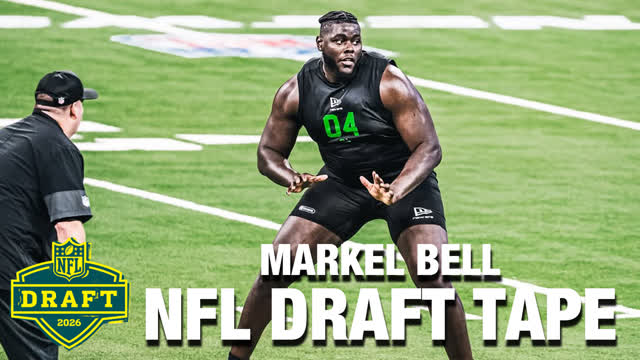
Reportedly: Markel Bell Vaulting into First-Round Consideration After Dominant Senior Season
Markel Bell: Miami's 346-Pound Problem for Defenses
The 2026 NFL Draft cycle is buzzing with talk of a "human skyscraper" residing in Coral Gables. Markel Bell, the Miami Hurricanes' massive 6-foot-9 left tackle, has become the focal point of offensive line evaluations. Weighing in at 346 pounds with wingspan metrics in the 96th percentile of all prospects measured since 1999, Bell is no longer just a physical curiosity; he is a refined pass protector who has dominated the ACC's best edge rushers.
In the 2025 season, Bell was nothing short of elite. He played 826 offensive snaps and, remarkably, allowed zero sacks and only one quarterback hit. His physical dominance helped anchor a Miami offense that averaged 34.1 points per game and ranked 24th nationally in passing yards. His ability to move with such size has scouts from teams like the Cleveland Browns and Washington Commanders keeping a very close eye on his final draft positioning.
Miami's Powerhouse 2025 Campaign
Under head coach Mario Cristobal, the Hurricanes enjoyed a stellar 13-2 season in 2025. This success was fueled by a balanced attack led by quarterback Carson Beck (3,813 passing yards) and star running back Mark Fletcher Jr. (1,192 rushing yards). Bell’s presence on the blindside was the insurance policy that allowed Beck to thrive, earning Bell Third-Team All-ACC honors and a spot on several PFF National Teams of the Week.
The Hurricanes' magical run eventually met its end in a high-stakes postseason clash. On January 19, 2026, Miami fell 21-27 to Indiana in a hard-fought contest. Even in defeat, Bell stood out, neutralizing the Hoosiers' pass rush for the majority of the game. That performance solidified his reputation as a big-game player who doesn't shrink when the lights are brightest.
Draft Outlook: From JUCO to the Top 32?
Bell's journey to this point is a testament to the transfer portal's potential. After beginning his collegiate career at Holmes Community College, he adjusted to the speed of the FBS in 2024 before becoming a full-time starter in 2025. Scouts are raving about his 36-inch arm length, which makes it nearly impossible for defenders to get into his chest.
While some analysts initially viewed him as a Day 2 developmental prospect, the lack of sack production allowed against him has forced a re-evaluation. With the draft just days away, rumors suggest Bell could be a surprise first-round pick for a team looking to secure a franchise tackle. His combination of rare size and proven production makes him the ultimate "problem" for defensive coordinators at the next level.
Jack Kelly’s Draft Stock Surging: BYU’s Sack Specialist Garnering Heavy Interest
The Jack Kelly Experience: BYU's Defensive Wrecking Ball
In the heart of Provo, a defensive star has emerged as one of the most productive pass rushers in recent BYU history. Jack Kelly, the redshirt senior linebacker, has completed a 2025 season that can only be described as a "wrecking ball" performance. Leading the Cougars' defense with 10.0 sacks and 13.5 tackles for loss, Kelly proved that his transition from Weber State was one of the most impactful transfer moves in the Big 12.
Kelly's 2025 campaign was defined by his relentless motor and high-level football IQ. Standing 6-foot-2 and weighing 242 pounds, he combined brute strength with a refined ability to diagnose plays pre-snap. He finished the season with 55 total tackles and earned First-Team All-Big 12 honors, ranking third in the conference in sacks. His performance has made him a household name among NFL scouts looking for a versatile hybrid defender.
Leading the Cougar Defense to New Heights
BYU’s defense in 2025 was a formidable unit, often keeping the team in tight games. Alongside teammates Isaiah Glasker and Harrison Taggart, Kelly anchored a linebacker corps that was considered the strongest in the conference. The Cougars' defensive identity was built on pressure and takeaways, a philosophy that Kelly embodied every Saturday.
The final chapters of the 2025 season saw the Cougars battling through a grueling Big 12 schedule. While the team finished with a strong defensive ranking, the statistics only tell part of the story. Kelly’s leadership as a team captain was cited by coach Kalani Sitake as a primary reason for the unit's success. His ability to affect the pocket, even when not recording a sack, led to BYU recording a significant number of interceptions and forced fumbles across the season.
NFL Draft Projection: The "Tweener" with Upside
As of April 15, 2026, Kelly is projected as a Round 5 to Round 7 prospect in the upcoming NFL Draft. While some scouts labeled him a "tweener" due to his size-to-speed ratio, his 10-sack production at the FBS level has made him an intriguing developmental project. Evaluations from the Senior Bowl highlighted his instincts in the run game, though some analysts have questions about his sideline-to-sideline speed in coverage.
Teams like the Washington Commanders have reportedly shown interest in Kelly as a situational pass rusher and special teams contributor. His 4.64-second 40-yard dash and 246-pound frame at the Senior Bowl indicate he has the physical tools to compete. Whether he starts his career as a sub-package rusher or a core special teamer, "The Jack Kelly Experience" is far from over as he prepares to take his wrecking ball style to the professional ranks.
Sources Say Namdi Obiazor is the 2026 NFL Draft’s Ultimate Sleeper Linebacker
Namdi Obiazor Is a One-Man Wrecking Crew
As the NFL scouting community descends upon the final weeks of pre-draft evaluations, one name is consistently appearing on "sleeper" lists: TCU’s Namdi Obiazor. The senior linebacker has been described as a "one-man wrecking crew" for the Horned Frogs, providing a level of versatility that is rare in today’s college game. After a standout 2025 season where he recorded 81 total tackles, 4 tackles for loss, and 2 interceptions, Obiazor has proven he can do it all from the second level of the defense.
Obiazor's physical profile is exactly what NFL defensive coordinators are looking for in a modern linebacker. At 6-foot-3 and 230 pounds, he possesses the length to disrupt passing lanes and the speed to chase down ball carriers from sideline to sideline. His 2025 stats included 2.0 sacks, further highlighting his ability to contribute as a blitzer when called upon in TCU's aggressive defensive scheme.
A Pillars of Stability in Fort Worth
The 2025 TCU Horned Frogs relied heavily on Obiazor’s veteran leadership. In a conference known for high-octane offenses, Obiazor was often the eraser for the TCU defense, cleaning up plays and providing a physical presence in the run game. His ability to drop into coverage was particularly notable, as his two interceptions were critical in turning the tide in conference matchups.
While the team faced its fair share of challenges during the 2025 season, Obiazor remained a consistent bright spot. His tackling efficiency was among the highest on the team, and his durability—playing through a significant number of snaps in every game—spoke volumes about his preparation. Scouts have noted that while he might not have the elite hype of a top-10 pick, his "floor" as a pro prospect is incredibly high because of his multifaceted skill set.
Draft Trajectory: Rising on the Boards
Heading into the late stages of April 2026, Obiazor is currently projected as a Round 4 to Round 5 selection. His Combine and Pro Day results were impressive, featuring a 4.53-second 40-yard dash and a 37-inch vertical jump, confirming the athleticism seen on tape. These numbers have caused a late-season surge in his draft stock, with sources suggesting he could even sneak into the end of Day 2 if a team falls in love with his measurables.
Obiazor’s journey from a high school safety to a refined collegiate linebacker has prepared him for the various roles he will likely play in the NFL. Whether he is asked to cover tight ends in space or play as a "thumper" in the middle of the field, the TCU star has the tools to succeed. As draft night looms, Namdi Obiazor remains one of the most intriguing defensive prospects in the 2026 class.
Is Arizona State’s Chamon Metayer the Most Versatile Tight End in the 2026 Class?
Why Chamon Metayer is Already on Every NFL Scout's Radar
Arizona State has long been a program capable of producing NFL-caliber talent, but Chamon Metayer might be one of the most unique prospects to come out of Tempe in years. The 6-foot-4, 255-pound tight end has transitioned from a productive transfer to a legitimate NFL Draft prospect following a standout 2025 season. Metayer finished the year with 38 receptions for 375 yards and 4 touchdowns, earning himself a Second-Team All-Big 12 selection and a permanent spot on the radar of professional scouts.
What makes Metayer so appealing to the next level is his blend of size and athleticism. A former standout basketball player, he uses his frame to box out defenders and possesses the "climb-the-ladder" ability to win contested catches in the red zone. In the Sun Devils' 2025 offensive scheme, he was a primary target for quarterback Sam Leavitt, often serving as the safety valve and the mismatch weapon that opened up the field for speedsters like Jordyn Tyson.
Fueling the Sun Devil Resurgence
Under head coach Kenny Dillingham, the Sun Devils have seen a massive culture shift, and Metayer was a central figure in that evolution. In 2025, ASU finished with a strong record, building on the 11-3 success of the previous year. One of the highlights of Metayer's season was a clutch performance against Iowa State, where he caught 6 passes for 68 yards and a touchdown, stabilizing an offense that was otherwise leaning heavily on the run game.
Beyond the stat sheet, Metayer's impact as a blocker cannot be overstated. His physicality in the run game was a major factor in the Sun Devils' ability to sustain drives and control the clock. This "all-around" tight end capability is exactly what NFL scouts are looking for—a player who doesn't have to be subbed out depending on the play call. Whether he was lining up in the slot or with his hand in the dirt, Metayer was a constant threat.
2026 Draft Projection: A Mismatch in the Making
As the 2026 NFL Draft approaches, Metayer is viewed as a rising talent who could thrive in a modern, tight-end-friendly NFL offense. Current projections place him as a mid-round pick, likely in the Round 4 to Round 5 range, though some analysts believe his physical upside could push him higher. His experience as a multi-year starter across different programs (Cincinnati and ASU) has given him a level of polish that few other tight ends in this class possess.
Scouts have praised his ability to turn short gains into significant yardage after the catch, a trait highlighted by his 18-yard score against Iowa State. With the draft nearly here, the question isn't whether Metayer will be drafted, but how soon a team will pull the trigger on a player with his unique athletic profile. As the Sun Devils look forward to their 2026 campaign, they do so knowing that Metayer has set a new standard for the position in Tempe.

Is Ohio State About to Break the NFL Draft? Analysts Predict Historic 2026 Class
Is Ohio State About to Break the NFL Draft? Analysts Predict Historic 2026 Class
With the 2026 NFL Draft just weeks away, the scouting world is buzzing with a singular sentiment: the Ohio State Buckeyes are poised to dominate the first round in a way rarely seen in college football history. After a 2025 season that saw the Buckeyes finish with a perfect 12-0 regular season and a narrow, heart-wrenching loss in the College Football Playoff quarterfinals, the focus has shifted from the field in Columbus to the podium in late April. Expert analysts, including Joel Klatt, are suggesting that the depth and high-end talent coming out of the Woody Hayes Athletic Center might actually 'break' draft projections.
The 2025 Buckeyes were a defensive juggernaut, holding every regular-season opponent to 16 points or less—a feat not achieved since the 1975 Florida Gators. This defensive excellence was anchored by stars like Caleb Downs and Sonny Styles, both of whom have seen their draft stock skyrocket into the top-10 conversation. Downs, a consensus captain and tactical wizard in the secondary, has been described by scouts as a 'plug-and-play' NFL starter who possesses a veteran’s understanding of the game. Meanwhile, the versatility of Sonny Styles at linebacker has NFL coordinators salivating over his ability to erase tight ends and stuff the run with equal efficiency.
The Day Era Gold Standard
Under Ryan Day, Ohio State has become a literal factory for first-round talent, particularly at wide receiver and defensive back. The 2025 roster featured a blend of veteran savvy and explosive youth. While freshman sensation Jeremiah Smith shattered every school receiving record for a first-year player—racking up 13 touchdowns and leading the team in scoring—he remains at least a year away from draft eligibility. However, his presence has highlighted the level of competition at practice that has sharpened the skills of draft-eligible receivers like Brandon Inniss and Carnell Tate.
The Buckeyes finished the 2025 season with a 12-2 overall record, having reclaimed their dominance over rival Michigan with a convincing regular-season finale win. Despite a 13-10 loss to Indiana in the Big Ten Championship and a 24-14 exit against Miami in the Cotton Bowl (CFP Quarterfinal), the sheer volume of elite talent on that roster has made the Buckeyes the most-watched team by NFL scouts this spring. The program averaged over 100,000 fans at home and record-breaking television viewership, largely driven by the 'Super Team' narrative that surrounded this specific group of draft-bound stars.
Defensive Core Setting the Pace
While the offense grabbed headlines with Julian Sayin leading the charge at quarterback, the defensive unit was the true soul of the 2025 squad. Beyond Downs and Styles, the interior defensive line, led by Tywone Malone and the emerging John Walker, provided a wall that few Big Ten opponents could penetrate. The secondary, featuring Jermaine Mathews Jr. and Davison Igbinosun, allowed the lowest completion percentage in the country. This collective success is expected to translate into at least five first-round selections for the Buckeyes, with another four to five players likely to be off the board by the end of Day 2.
As the draft cycle reaches its peak, the conversation in Columbus isn't just about who goes where, but how this class will define the legacy of the 2025 team. If the Buckeyes manage to set a new record for first-rounders from a single school, it will cement this roster as one of the most talented assemblies in the history of the sport, despite the lack of a national championship trophy to show for it.
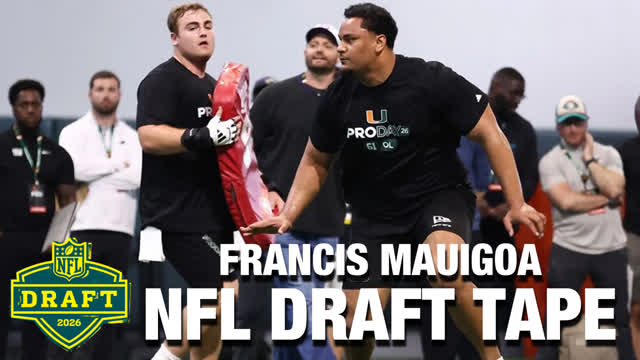
Francis Mauigoa Declares for NFL Draft After Winning ACC Jacobs Blocking Trophy
Francis Mauigoa Declares for NFL Draft After Winning ACC Jacobs Blocking Trophy
The Miami Hurricanes’ offensive line is losing its cornerstone as consensus All-American offensive tackle Francis Mauigoa has officially declared for the 2026 NFL Draft. Mauigoa, who was the heartbeat of a Miami unit that surged into the College Football Playoff semifinals this past season, enters the draft as a projected top-10 pick and arguably the most technically sound tackle prospect in recent years. His departure marks the end of a dominant three-year run where he started every single game of his collegiate career, totaling over 2,500 snaps without missing a beat.
During the 2025 season, Mauigoa was nothing short of spectacular. He was awarded the Jacobs Blocking Trophy, given to the best blocker in the ACC, after allowing zero sacks and maintaining a 1.6% pressure rate—the 10th-lowest among all FBS tackles. His performance was a primary reason the Hurricanes’ offense ranked No. 1 in the nation in points per game (43.9) and yards per game (537.2). Standing at 6-6 and weighing in at 335 pounds, Mauigoa’s combination of raw power and 'light' feet has made him a favorite among NFL scouts who value versatility in both zone and gap running schemes.
A Legacy of Trench Dominance
Under the tutelage of offensive line coach Alex Mirabal, Mauigoa developed into a 'wall' that few edge rushers could overcome. In Miami's critical quarterfinal victory over Ohio State, Mauigoa was the highest-graded player on the field, stonewalling the Buckeyes' elite pass rush and paving the way for a 24-14 win. His ability to mirror defenders and anchor against bull rushes has become his signature, with PFF awarding him an 87.0 pass-blocking grade, the best for any draft-eligible right tackle in the 2026 class.
The 2025 Hurricanes finished with a 13-3 record, including a massive win over Syracuse where Mauigoa was named the Outland Trophy National Player of the Week. The team ranked No. 5 nationally in fewest tackles for loss allowed, a testament to the stability Mauigoa provided on the right side. His presence allowed the Miami coaching staff to run an expansive, no-huddle spread option that wore down opponents and kept the Hurricanes at the top of the ACC standings for much of the year.
NFL Readiness and Draft Stock
Scouts have long pointed to Mauigoa's high football IQ and preparation as reasons for his rapid ascent. Having played at IMG Academy before arriving at 'The U,' he brought a professional approach to his game that resonated through the locker room. NFL mock drafts currently have him linked to teams like the Pittsburgh Steelers and the Kansas City Chiefs, both of whom are reportedly looking to trade up to secure a franchise tackle of his caliber.
As Miami prepares for the 2026 season without their star tackle, the focus shifts to how the program will replace a player who never missed a start. For Mauigoa, the focus is now the NFL Combine and individual workouts. With his measurables—including a 5.14-second 40-yard dash and a massive 80-inch wingspan—he is expected to be one of the 'winners' of the pre-draft process. His legacy in Coral Gables is secure as one of the most decorated linemen to ever wear the orange and green.
Report: Eric McAlister’s NFL Resume 'Stacked' After Historic 1,190-Yard Season
Report: Eric McAlister’s NFL Resume 'Stacked' After Historic 1,190-Yard Season
As the scouting community dives deep into the tape for the 2026 NFL Draft, one name that has consistently surfaced as a 'possession-receiver goldmine' is TCU’s Eric McAlister. Following a senior season that rewrote parts of the Horned Frogs' record books, McAlister has positioned himself as a high-floor prospect with the frame and hands to survive in the professional ranks. His 2025 campaign was defined by consistency and the rare ability to turn short underneath throws into back-breaking first downs, earning him a reputation as a 'quarterback's best friend.'
Statistically, McAlister’s 2025 season was one for the ages in Fort Worth. He tallied 1,190 receiving yards and 10 touchdowns, tying the TCU single-season record with six 100-yard receiving games. His impact was felt most in high-leverage situations; McAlister led the Big 12 in first-down reception rate, moving the chains on nearly 90% of his catches. This reliability helped TCU navigate a competitive Big 12 schedule to finish with a 9-4 record, culminating in a strong postseason showing that has scouts viewing him as a potential Day 2 steal.
The Evolution of a Matchup Nightmare
Standing 6-3 and weighing 205 pounds, McAlister used his massive frame to box out defenders throughout the 2025 season. Whether it was the explosive 107-yard performance against Iowa State or the late-season surge where he recorded 361 yards in fourth quarters alone, McAlister proved he could handle the volume and the pressure. His transition from Boise State to TCU was seamless, as he became the primary target for quarterback Josh Hoover, who threw for over 3,400 yards largely on the back of McAlister's route-running precision.
The TCU offense in 2025 was high-powered, averaging nearly 300 passing yards per game. Alongside teammates like Savion Williams and JP Richardson, McAlister benefited from a spread system that allowed him to showcase his flexibility. Despite being a 'big' receiver, he displayed a surprising ability to change directions, making him a difficult cover for smaller cornerbacks in the red zone, where he hauled in five of his ten touchdowns.
Draft Outlook and Pro Comparison
While some scouts have raised questions about his vertical burst, McAlister’s 'NFL-ready' label comes from his elite catch radius and toughness over the middle. He has been compared to possession stalwarts like Keenan Allen, with analysts praising his 'refusal to go down' after contact. In his final collegiate game, McAlister was once again a focal point, securing crucial catches that secured a winning season for Sonny Dykes' squad.
As the draft approaches on April 23, McAlister’s stock remains steady. His participation in the Senior Bowl further solidified his standing, as he was named the Offensive Player of the Week for the American team. For NFL franchises looking for a reliable WR2 or WR3 with the potential to grow into a primary chain-mover, McAlister’s 'stacked' resume provides plenty of evidence that he is ready for Sundays.
Could 'The Godfather' Dontay Corleone Be the First DT Taken in 2026?
Could 'The Godfather' Dontay Corleone Be the First DT Taken in 2026?
In the world of interior defensive linemen, few players carry a nickname as fitting as Cincinnati’s Dontay Corleone. Known as 'The Godfather' for his ability to control the trenches and make offers offensive coordinators can't refuse, Corleone is currently one of the most talked-about defensive prospects heading into the 2026 NFL Draft. After a senior season that saw him earn First Team All-Big 12 honors for the third consecutive year, the 335-pound nose tackle is being evaluated as a potential first-round disruptor who can anchor a professional 3-4 or 4-3 defense with ease.
Corleone’s 2025 season was a masterclass in run-stuffing. According to Pro Football Focus, he earned an 80.9 run-defense grade, ranking near the top of all FBS interior defenders. Despite facing constant double teams, he recorded 39 tackles and three sacks, including a dominant performance against Big 12 champion Arizona State where he recorded two tackles for loss and a sack in a 24-14 upset. His ability to hold the point of attack allowed the Bearcats to remain competitive in a transition year, finishing the season with a 7-6 record and a bowl appearance.
The Return to Dominance
What makes Corleone’s draft stock even more impressive is his resilience. After a 2024 season that was briefly sidelined due to a pulmonary embolism, he returned in 2025 looking more explosive than ever. He opened the season with a sack against Pitt and never looked back, proving that his health concerns were firmly in the rearview mirror. Scouts have noted his 'high-end linear explosion' for a man of his size, which makes his bull rush almost impossible to stop when he gets a clean jump off the ball.
The Cincinnati defense in 2025 relied heavily on the pressure generated by the 'Godfather-led' front. While the team struggled with consistency in the secondary, Corleone’s presence in the middle forced opponents to abandon the run and try their luck against the pass. He finished his career with 109 tackles, 17 tackles for loss, and 9.5 sacks—numbers that are elite for a true nose tackle whose primary job is to eat blocks and occupy space.
NFL Draft Projection
Entering the draft cycle, Corleone is projected as a late first-round or early second-round pick. NFL teams like the Dallas Cowboys and Baltimore Ravens, who prioritize interior strength, have reportedly shown significant interest. While some analysts have pointed to his weight and conditioning as areas for improvement, his raw strength and natural leverage are undeniable on film. His ability to shed blocks with ease and his upper-body power make him a 'plug-and-play' prospect for any team needing a boost in run defense.
As the draft looms, Corleone has spent his spring working out in Cincinnati, maintaining his status as a local hero who even has his own 'Godfather Burger' at a local restaurant. For the NFL, he represents a rare blend of old-school power and modern-day athleticism. Whether he is the first defensive tackle off the board or not, 'The Godfather' is destined to make a massive impact at the next level.
Rising Star: How Kaidon Salter is Climbing 2026 NFL Draft Boards
Rising Star: How Kaidon Salter is Climbing 2026 NFL Draft Boards
Despite a challenging 3-9 season for the Colorado Buffaloes in 2025, the draft buzz surrounding quarterback Kaidon Salter (often appearing as 'Slater' on draft tapes) has never been higher. As we approach the final weeks before the 2026 NFL Draft, Salter is emerging as the premier dual-threat quarterback of the class, with scouts enamored by his ability to make off-platform throws and extend plays with his legs. In a season where Colorado struggled to protect the pocket, Salter’s individual brilliance shone through, keeping the Buffaloes competitive in several high-scoring Big 12 matchups.
The 2025 Colorado team faced an uphill battle, finishing 1-8 in conference play, but Salter was the clear bright spot. He operated a no-huddle spread option under offensive coordinator Pat Shurmur that, while inconsistent, flashed explosive potential. Salter’s ability to navigate pressure was put to the ultimate test, as Colorado’s offensive line often collapsed against elite Big 12 pass rushes from teams like Texas Tech and Utah. Despite this, Salter’s 'NFL Draft Tape' is filled with highlights of him evading three or four defenders before launching 50-yard strikes downfield.
Developing Under Coach Prime
In his time at Boulder under Deion Sanders, Salter has developed a professional-level poise and a 'thick skin' that NFL executives value. Sanders has frequently praised Salter’s work ethic and leadership, noting that he never wavered despite the team's win-loss record. This mental toughness, combined with his physical tools—a quick release and elite-level speed—has caused many scouts to compare him to a young Lamar Jackson or Jayden Daniels. His 2025 stats, while hampered by the team's overall performance, showed significant improvement in his completion percentage and decision-making in the red zone.
The Buffaloes' last game of the 2025 season was a rivalry matchup against Kansas State, a loss that underscored the team's need for more depth. However, Salter accounted for over 300 yards of total offense in that game alone, leaving a lasting impression on the scouts in attendance. His ability to read defenses and find open lanes in a chaotic environment has moved him from a projected third-round developmental pick into the first-round conversation for QB-needy teams.
A High-Upside Draft Prospect
As the 2026 draft nears, Salter’s stock is trending upward. He is expected to be one of the top quarterbacks taken, with teams like the Las Vegas Raiders and New York Giants reportedly doing extensive homework on his character and scheme fit. While some analysts point to Colorado’s 3-9 record as a concern, most scouts look at the 'trash' he had to work with and see a player who did more with less than almost any other quarterback in the country.
With the NFL Combine and Pro Day in the books, Salter has checked all the physical boxes. His 4.45-second 40-yard dash time and his ability to hit every level of the field during passing drills have confirmed his status as a high-upside prospect. For a quarterback who spent his college years in the spotlight of 'Prime Time,' the transition to the bright lights of the NFL seems like a natural next step.
Chase Roberts: The BYU Captain Solidifying His NFL Draft Value
Chase Roberts: The BYU Captain Solidifying His NFL Draft Value
BYU’s transition into the Big 12 has been a journey defined by grit, and no player has embodied that more than senior wide receiver Chase Roberts. As the 2026 NFL Draft approaches, scheduled for April 23-25, the former Cougars captain is generating significant buzz following a standout performance throughout the 2025 season and a high-octane Pro Day in Provo. Roberts has transitioned from a highly touted recruit into a legitimate pro prospect, often described by coaches as a "defensive nightmare" for opposing secondaries.
The Cougars finished their 2025 campaign with a stellar 12-2 record, a performance that culminated in a thrilling 25-21 victory over Georgia Tech in the Pop-Tarts Bowl. Throughout this run, Roberts served as the primary aerial threat, hauling in crucial touchdowns and acting as a security blanket for the BYU offense. His career totals are a testament to his consistency: 170 receptions, 2,586 yards, and 18 touchdowns across 49 career games. In 2025 alone, his production earned him All-Big 12 Third Team honors and a prestigious invitation to the NFL Scouting Combine in Indianapolis.
Pro Day Surge: Shaving the Seconds
During the recent BYU Pro Day on March 20, 2026, Roberts addressed the primary question lingering in the minds of NFL scouts: his top-end speed. After recording a 4.64-second 40-yard dash at the NFL Combine—a time some considered slow for a wideout—Roberts returned to his home turf and delivered a more respectable 4.51-second sprint. This improvement, combined with his 6-foot-3, 209-pound frame, has forced evaluators to take a second look at his potential as a physical "Z" receiver or a big slot option at the next level.
Scouts have praised Roberts for his "football speed," noting that he plays faster on tape than his testing numbers might suggest. His ability to win contested catches and track the ball in the air has made him a favorite among quarterback-needy teams looking for a reliable target who can move the chains. His Relative Athletic Score (RAS) in the explosion categories was particularly high, indicating a player who can jump and accelerate effectively in short bursts.
Leadership and the BYU Legacy
Beyond the statistics, Roberts has been lauded for his intangibles. A two-time team captain, he has been a pillar of the BYU Cougars program under head coach Kalani Sitake. His maturity—bolstered by a two-year mission trip to Canada prior to his college career—is seen as a major asset for NFL front offices seeking low-risk, high-character individuals. Sitake has frequently described Roberts as one of the greatest leaders he has ever coached, highlighting his ability to execute any role asked of him on the field.
As the draft clock ticks down, Roberts is projected by many analysts as a late-round selection or a high-priority undrafted free agent. However, with several teams like the Dallas Cowboys reportedly scouting him as a potential specialist for tough catches over the middle, his stock could rise even further. Whether he is hauling in a one-handed touchdown or providing a veteran presence in a young locker room, Roberts has proven that he is ready for the professional stage.
Rumors Swirl Around TCU’s Eric McAlister Ahead of 2026 NFL Draft
Rumors Swirl Around TCU’s Eric McAlister Ahead of 2026 NFL Draft
The NFL Draft rumor mill is heating up as we approach the end of spring, and one name that continues to surface as a potential mid-round "steal" is TCU’s Eric McAlister. Following a dominant season where the TCU Horned Frogs finished with a 9-4 record and secured an emotional 30-27 overtime win against USC in the Alamo Bowl, McAlister has emerged as a high-priority target for several NFL franchises. Reports from draft insiders suggest that the Kansas City Chiefs and Dallas Cowboys are among the teams closely monitoring the physical wideout ahead of the April 23rd kickoff in New York.
McAlister’s 2025 campaign was nothing short of historic. Operating in Sonny Dykes’ high-octane Air Raid offense, the redshirt senior recorded 72 receptions for 1,190 yards and 10 touchdowns. These numbers earned him First Team All-Big 12 honors and solidified his reputation as a unique physical specimen. At 6-foot-4 and 210 pounds, McAlister possesses a rare combination of size and tackle-breaking ability. Advanced scouting reports have labeled him a "unicorn," citing a rate of 0.30 missed tackles forced per reception—the highest mark for a non-slot receiver in the 2026 class.
Reported Interest from NFL Contenders
Rumors of interest from the Kansas City Chiefs have intensified as experts point to the team’s ongoing search for vertical threats. Mock drafts have frequently placed McAlister as a fifth-round target for Kansas City, where he could serve as a mismatch nightmare in the red zone for Patrick Mahomes. Similarly, the Dallas Cowboys have reportedly evaluated McAlister as a candidate for their "big slot" role, a position that would allow him to leverage his frame against smaller nickel cornerbacks.
Scouts are particularly impressed with McAlister’s ability to dominate in both man and zone coverage. Under the guidance of offensive coordinator Kendal Briles, TCU’s offense averaged over 31 points per game in 2025, with McAlister often serving as the focal point of the passing attack. His catch radius and ball-tracking skills have drawn comparisons to established NFL veterans, though analysts suggest he still has room to refine his route tree at the professional level.
Character and Commitment
What has truly set McAlister apart during this draft cycle is his perceived character. Unlike many high-profile prospects who opted out of the postseason to protect their draft stock, McAlister chose to play in the Alamo Bowl, a decision that has been praised by both the TCU coaching staff and NFL executives. This "team-first" mentality, combined with his elite production, has made him a favorite for teams looking to bolster their locker room culture.
As the 2026 NFL Draft nears, McAlister is widely considered a Tier 9 prospect with significant fantasy and professional upside. While he may not be the first receiver off the board, his physical traits and statistical dominance in the Big 12 suggest he could be a Day 3 selection that provides immediate dividends for an NFL offense. With the draft less than two weeks away, all eyes in Fort Worth are on McAlister as he prepares to make the leap to the big leagues.